

Contents
1 🧭 Mindset, safety, and scope
2 💡 Lighting basics: lumens, kelvins, CRI, dimming
3 🧰 Budget map: parts, tools, and where to save
4 🧯 Safety checklist before you touch wiring
5 🪛 Removing old fixtures step by step
6 🔧 Installing new fixtures the right way
7 🧲 Smart alternatives: plug-in sconces and adapters
8 🕯️ Bulbs that transform a room on their own
9 🪞 Style upgrades: shades, diffusers, and finishes
10 🧱 Kitchen, bath, bedroom, and hallway strategies
11 🪟 Small-space tricks: mirrors, bounce, and layers
12 🧮 Cost table, shopping list, and weekend schedule
13 🛠️ Troubleshooting common issues
14 🎨 Design rules for a luxe look on less
15 🔗 Money-smart choices and internal resources
16 ✅ Wrap-up and maintenance plan
17 ❓ FAQ
Upgrading lighting fixtures on a budget is the focus keyword of this guide, and we lead with it because light is the fastest, cheapest way to change how a home feels and functions. The right fixture in the right place can make rooms look larger, cleaner, and more finished—without tearing down walls or buying new furniture. This article gives you a step-by-step plan to select affordable fixtures, install them safely, and tune bulbs and controls so everything looks intentional and energy bills stay tame. You’ll also learn how to avoid common pitfalls that waste money, from buying the wrong dimmer to mixing bulbs that clash.
🧭 Mindset, safety, and scope
Think like a project manager with a tight budget: define scope, set a spending ceiling, and commit to a weekend plan. Your scope might be “replace two flush mounts, swap a vanity light, and add a plug-in sconce,” or “install a dimmer, change bulbs, and repaint two shades.” Keep the focus on high-impact swaps in rooms where you spend the most time—kitchen, entry, bath, and living. Avoid scope creep (ceiling fans, rewiring multi-way circuits) unless the budget and skills truly allow it. Safety isn’t a vague checkbox—it’s a checklist you follow every single time.
📌 Goals that actually save money
Target results you can see and measure: brighter counters without glare, a vanity that flatters skin tones, a living room that dims for movies but reads crisply for chores, and hallways that feel safe at night. Use warm-to-neutral color temperatures (2700–3000K for living spaces; 3500–4000K for task areas) and bulbs with a high Color Rendering Index (CRI 90+ when possible) so colors look natural. Favor LED everywhere for lower wattage and cooler operation. Choose fixtures that use standard medium-base (E26) bulbs so you can shop widely and cheaply for replacements.
💡 Lighting basics: lumens, kelvins, CRI, dimming
Lumens are brightness, watts are power draw. For a small bedroom, 1,000–2,000 lumens in the main layer is typical; a kitchen may want 3,000–6,000 lumens spread across ceiling and task zones. Kelvins measure color temperature—lower is warmer (2700K glows like incandescent), higher is cooler (4000K reads neutral to crisp). CRI rates how true colors appear; the higher, the better for skin, food, and fabrics. Dimming expands usefulness: bright for cleaning, soft for dinner, night-low for safety. Not all LEDs dim well and not all dimmers are rated for LED loads; compatibility matters.
🧠 Layered lighting made simple
Every room benefits from three layers: ambient (general), task (focused), and accent (mood/highlight). You don’t need all three in equal amounts. In budget upgrades, ambient is your base—think flush mount, semi-flush, or an even grid of inexpensive recessed-look disks. Task lighting adds a sconce by the mirror or an under-cabinet strip over prep space. Accent can be a picture light, LED tape behind a shelf, or a low-watt bulb in a table lamp. The trick is balance: enough brightness to do things well, plus softer options for comfort and mood.
🧰 Budget map: parts, tools, and where to save
Before shopping, turn your budget into line items. Allocate dollars to the items with the biggest visual impact—finish, shade shape, and scale—then reserve a chunk for bulbs and a dimmer that plays nicely with them. Many “cheap” fixtures include poor bulbs; factor in replacements. Tools matter less than patience, but a few basics make work safer and faster.
💵 Sample allocation and tool checklist
| Category | Target Spend | Notes |
|---|---|---|
| Fixtures (2–4 pieces) | $120–$220 | Simple shapes, good proportions, standard bulb bases |
| LED bulbs (8–12 bulbs) | $24–$60 | 2700–3000K, CRI 90+, dimmable where needed |
| Dimmer(s) & controls | $18–$40 | Match to LED loads; check compatibility chart |
| Electrical odds & ends | $10–$25 | Wire nuts, screws, mounting strap, ground pigtails |
| Safety gear & tester | $15–$35 | Non-contact voltage tester, gloves, safety glasses |
| Optional plug-in solutions | $20–$50 | Smart plugs, cord covers, adhesive channels |
- Tools: voltage tester, screwdriver set, wire stripper, needle-nose pliers, level, step stool, painter’s tape, small container for screws.
- Supplies: wire nuts (assorted), electrical tape, ground screw, short green pigtail, extra mounting crossbar, anchors for drywall.
🧯 Safety checklist before you touch wiring
Turn off the correct breaker and tape the switch to “off.” Use a non-contact tester at the fixture wires and again at the wall switch to verify power is truly dead. Work with dry hands on a dry floor. Keep a second person nearby to hand tools and spot you on a step stool. If you encounter aluminum branch wiring, brittle cloth insulation, or a melted box, stop and call a pro. Follow local rules; some jurisdictions require permits for certain electrical work. Never mix copper and aluminum without proper connectors.
🔒 Box, bracket, and grounding basics
Every ceiling or wall fixture must attach to an electrical box that is secure and rated for the load (ceiling fans need special boxes). The mounting strap or bracket must line up with the box’s threaded holes. Always connect the fixture’s ground wire (usually green or bare copper) to the circuit ground and the metal box if present. If the metal box is grounded via a metal conduit, ground to the box with a green screw and attach a pigtail to the fixture ground. Tight connections reduce flicker and heat. If a connection feels loose or uncertain, redo it before closing the canopy.
🪛 Removing old fixtures step by step
Lay a towel on the floor, place a small bowl for screws on a nearby surface, and set up bright task lighting (a clamp light or headlamp). Confirm power is off again before touching wires. Photograph the existing wiring so you can restore it if needed. Support the old fixture with one hand while removing the last screws. As you lower it, you’ll see three conductors: hot (usually black), neutral (white), and ground (green/bare). Some older homes may lack a ground or may have different color conventions; if something looks odd or damaged, stop and consult a licensed electrician.
🧹 Clean and prep the box
Remove old tape, hardened wire nuts, and any crumbling insulation. Straighten the supply wires, trim back scorched ends, and strip fresh copper to the length your new wire nuts specify (often about 1/2 inch). Check that the box is tight to framing; if the screws spin or the box shifts, use a repair bar or anchors designed for old work boxes. Pre-fit the new mounting strap and verify that the fixture canopy will sit flush against the ceiling or wall.
🔧 Installing new fixtures the right way
Read the manufacturer’s diagram carefully—many failures come from skipping a tiny step. Pre-assemble parts on a table to understand how they stack. Connect ground to ground first, then neutral to neutral, then hot to hot. Twist wires together clockwise, add a properly sized wire nut, and tug gently to test. Tuck splices into the box in a gentle “S” shape; don’t crush them. Mount the canopy snug, not over-tight. Aim glass shades away from reach to reduce fingerprints and bumps. Install bulbs last and test the fixture before final tightening.
🧩 Height, spacing, and scale
Over a dining table, hang a pendant so the bottom sits about 30–34 inches above the tabletop. For a ceiling with 8-foot height, semi-flush fixtures often look better than flush because they cast light sideways and upward, reducing shadows. In a hallway, space fixtures roughly every 8–10 feet or aim for 20 lumens per square foot across the run. At a vanity, side sconces at 60–66 inches high and 28–36 inches apart light faces most evenly; a three-light bar above the mirror is a solid budget alternative when side sconces aren’t possible.
🧲 Smart alternatives: plug-in sconces and adapters
If hardwiring is out of budget, plug-in sconces, picture lights, and swing-arm lamps add layers without opening walls. Use cord covers or adhesive channels to keep lines tidy; paint them wall color to help them disappear. Smart plugs let you group lamps into a single app-controlled scene so the room “turns on” with one tap. Battery-powered puck lights work inside cabinets or as nightlights but save them for accent—not primary—lighting. For renters, removable adhesive hooks support lightweight cord runs.
🧠 Bulb and control pairings for plug-ins
Use warm-dim or “sunset dimming” bulbs where you relax; they shift from 2700K at full to ~2000K at low. Pair lamps with a single remote or smart plug brand to avoid app clutter. If you need motion activation in a hallway, a plug-in motion sensor feeding a multi-outlet adapter can run two lamps without extra wiring. Label cords so future you remembers which plug controls which lamp.
🕯️ Bulbs that transform a room on their own
Even without changing fixtures, bulb choice can refresh a room instantly. Look for high-CRI (90+) LEDs with a pleasant diffusion lens so you don’t see harsh diodes. A 60-watt-equivalent LED typically gives 800 lumens for under 10 watts; a 100-watt equivalent yields ~1600 lumens for under 20 watts. For reading, use 3000K in table lamps; for dining, 2700K feels welcoming. If you work from home, try 3500K task lamps to keep colors honest without going blue. Smart bulbs add scenes and schedules, but for basic use, regular high-quality LEDs often deliver better value.
🔄 Mix and match carefully
Stay consistent within sightlines: if the kitchen is 3000K and open to the living room, keep the living room at 2700–3000K instead of jumping to 4000K. Mixing color temperatures can make walls look dingy and wood tones weird. Replace bulbs in sets so brightness and tint match across a fixture. Keep spares in a labeled bin to avoid a patchwork of light as bulbs age.
🪞 Style upgrades: shades, diffusers, and finishes
When money is tight, change what you touch and what you see up close. Swap out yellowed glass bowls for frosted drums, clear cylinders, or opal globes; modern diffusers increase spread and cut glare. Many budget fixtures accept standard shades—measure the fitter (often 1-5/8 or 2-1/4 inches) before purchasing. A simple linen shade on a table lamp, a schoolhouse globe in a hallway, or a seeded glass cylinder over the sink can shift the whole vibe. For finishes, match metals to nearby hardware for cohesion; mixing too many metals can look chaotic on a budget.
🧼 Cleanlines and care
Shiny does not equal new—clean equals new. Dust and film steal lumens. Every six months, power down, remove shades, and wash with mild soap and water; dry thoroughly. Wipe bulbs with a soft cloth. Tighten set screws on shades to prevent rattles and micro-vibrations that shorten bulb life.
🧱 Kitchen, bath, bedroom, and hallway strategies
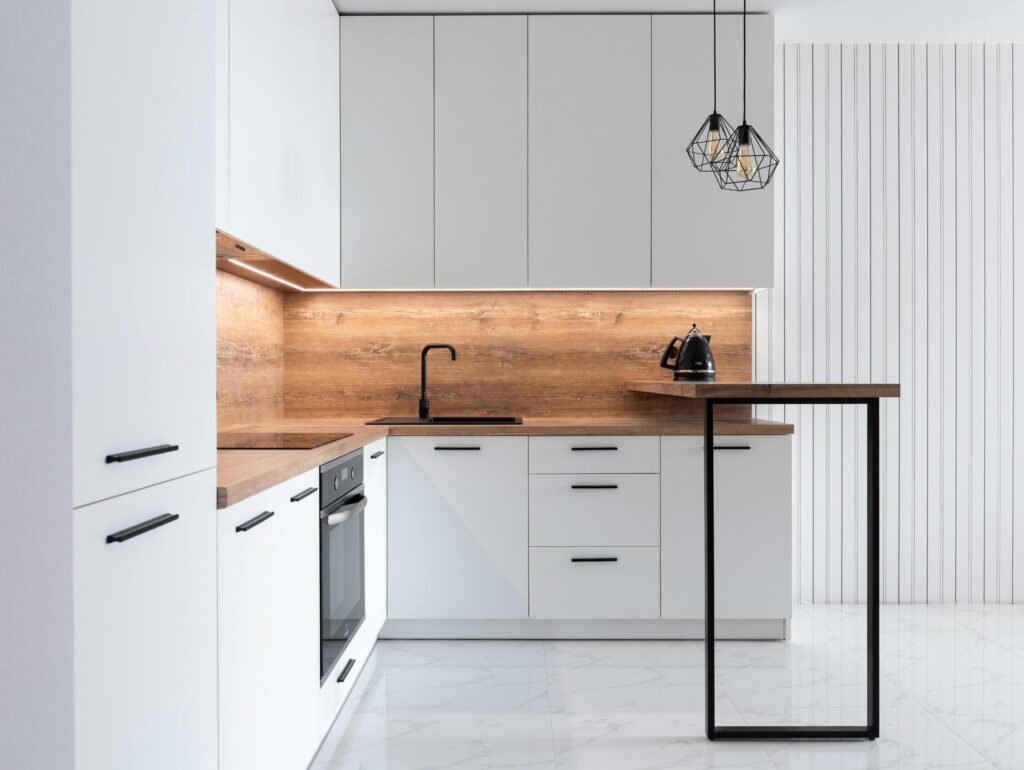
Kitchen: Replace a tired central dome with a semi-flush drum or a pair of inexpensive mini-pendants over an island. Under-cabinet LED bars or tape (plug-in or hardwire) add task light and eliminate counter shadows. Keep color temps around 3000K for food friendliness. Bath: Vanity lighting should be even; a single three-light bar above the mirror is budget-friendly. Add a warm night-low lamp or motion bulb in a nearby hall to reduce nighttime glare. Bedroom: Use bedside plug-in sconces to free nightstand space and add a floor lamp in a dark corner. Living: Add a plug-in floor lamp behind the sofa and swap harsh bulbs for warm-dim LEDs. Hallway: Replace a dim flush mount with a brighter semi-flush and add a night-safe plug-in lamp near bedrooms.
🏠 Rental-friendly swaps
Many landlords allow fixture swaps if you reinstall original pieces at move-out. Keep box photos, screws, and old fixtures labeled in a closet. Use plug-in solutions and adhesive cord covers if drilling is restricted. For concrete ceilings, plug-in track kits and tall floor lamps behind sofas add layers without anchors. Document everything so your deposit stays safe.
🪟 Small-space tricks: mirrors, bounce, and layers
Mirrors opposite windows double daylight and reduce the amount of artificial light you need. Bounce light off pale ceilings with semi-flush fixtures that cast upward. Use narrow beam bulbs to highlight art and wider floods for general glow. Transparent or open-bottom shades keep sightlines clear. In micro-kitchens, an LED strip under the front lip of cabinets provides task light without staring at diodes; choose a diffused channel for comfort.
📏 Proportion and visual weight
Choose fixtures that match room scale. An 11–13 inch drum suits many small bedrooms; a 15–18 inch semi-flush can handle a larger living room with 8-foot ceilings. Over small dining tables, a 12–16 inch pendant often looks right; over a 72-inch table, aim for 20–24 inches or two smaller pendants. Err slightly larger rather than too small—tiny fixtures make rooms feel unfinished.
🧮 Cost table, shopping list, and weekend schedule
| Item | Low | Mid | Notes |
|---|---|---|---|
| Semi-flush fixture | $35 | $70 | Simple drum or opal globe |
| Vanity light (3-light) | $40 | $90 | Glass shades, standard bulbs |
| Pendant (single) | $25 | $60 | Metal shade or small schoolhouse |
| LED 60-w eq bulbs (4-pack) | $6 | $12 | 2700–3000K, CRI 90+ |
| Dimmer (LED compatible) | $15 | $28 | Check fixture/bulb compatibility |
| Smart plug (optional) | $10 | $20 | Group lamps into one scene |
| Wire nuts & screws | $5 | $9 | Assorted sizes |
| Voltage tester | $12 | $22 | Non-contact style |
- Shopping list: fixture(s), bulbs, dimmer(s), tester, wire nuts, ground screw/pigtail, extra crossbar, anchors, cord covers (if plug-in), step stool.
- Prep kit: microfiber towels, mild soap, glass cleaner, painter’s tape, zip bags for hardware, sticky notes to label breakers.
📅 Weekend schedule (48–72 hours)
- Friday evening: Photograph existing fixtures and wiring, label breakers, gather tools, lay drop cloths, and pre-assemble new fixtures.
- Saturday morning: Cut power, remove two old fixtures, clean boxes, patch paint if needed, and install first new fixture.
- Saturday afternoon: Install second fixture and vanity light; replace bulbs; test dimmer compatibility and adjust settings.
- Sunday morning: Add plug-in sconces or a floor lamp layer; tidy cords; install smart plug scenes.
- Sunday afternoon: Deep-clean shades and glass, photograph results, and store old fixtures safely.
🛠️ Troubleshooting common issues
Fixture hum or flicker on a dimmer: Not all dimmers and LEDs play nicely. Set the trim adjustment on the dimmer (if available), try a different bulb model, or swap the dimmer for one on the bulb manufacturer’s compatibility list. Light won’t turn on: Confirm power is off and then back on at the breaker, check wire-nut connections, verify that the neutral and hot aren’t reversed, and test with a known-good bulb. Loose canopy: Adjust the mounting strap or add a thin foam pad so the canopy sits snug without wobble. Shadows or hot spots: Swap to a wider beam bulb, flip shades open-down or open-up, or add a secondary lamp to fill gaps.
🔧 Color mismatch and glare
If a fixture looks too blue, swap 4000K bulbs for 2700–3000K. If counters glare, choose a frosted bulb or add a diffuser. If walls look muddy, raise CRI or brighten to the next lumen level. If a shade casts zebra stripes, rotate the diffuser or use an opal globe. Tiny tweaks beat big purchases.
🎨 Design rules for a luxe look on less
Restraint feels expensive. Limit the palette to two neutrals plus a metal finish. Repeat shapes—a globe overhead, globe vanity lights, and round knobs—so the eye reads harmony. Choose scale that fits the room, not whatever is on sale. In open plans, keep related areas within one color-temperature band. Clean glass, consistent bulbs, and straight mounting do more for perceived quality than designer labels ever will.
🖼️ Style templates you can copy
- Modern warm: Matte black fixtures, 2700K bulbs, linen shades, warm wood accents.
- Fresh neutral: Brushed nickel, opal glass, 3000K bulbs, soft gray walls.
- Classic brass: Aged brass with milk glass, 2700K bulbs, crisp white trim.
- Cozy cottage: Small schoolhouse globes, 2700K, beadboard backsplash, woven basket for cords.
🔗 Money-smart choices
Budget upgrades work best when they’re part of a broader plan to improve value without overspending. For room-by-room strategies that pair lighting with quick decor wins, see our guide on home upgrades that elevate style without overspending. If a small lighting refresh turns into a larger renovation and you’re weighing funding options, review smart ways to use your home equity without losing value before you borrow so today’s savings don’t become tomorrow’s stress.
✅ Wrap-up and maintenance plan
Upgrading lighting fixtures on a budget succeeds when you protect time, money, and safety. Decide scope, buy only what serves that scope, and follow the safety checklist without shortcuts. Choose LEDs with the right kelvins and CRI, dim smoothly with compatible controls, and clean glass twice a year so every lumen counts. Small, consistent improvements—one fixture here, a smarter bulb there—stack into rooms that look intentional and feel comfortable every day.
❓ FAQ
Can I swap a light fixture myself?
Often yes, if you turn off power at the breaker, verify with a tester, and the box and wiring are in good condition. Follow instructions, match wire colors (hot to hot, neutral to neutral, ground to ground), and use properly sized wire nuts. If you see damaged insulation, aluminum branch wiring, or a loose box, hire a licensed electrician.
Which bulbs make rooms feel upscale?
High-CRI LED bulbs at 2700–3000K with a soft diffusion lens create a calm, flattering look. Keep color temperature consistent within the same sightline and use dimmers for flexibility. Avoid ultra-cool bulbs (5000K+) in living spaces unless you specifically want a daylight effect.
Is a dimmer worth it on a budget?
Yes. An LED-compatible dimmer makes a basic fixture feel custom by adjusting brightness to task and mood. It also saves energy at lower levels. Check bulb compatibility charts and set the dimmer’s low-end trim to prevent flicker.
What’s the cheapest way to improve kitchen lighting?
Swap a central dome for a semi-flush with better diffusion, add plug-in under-cabinet strips, and use 3000K high-CRI bulbs. These three changes usually deliver a dramatic improvement for under $150.
This content is for informational and educational purposes only. It does not constitute investment advice or a recommendation of any kind.
Understand the legal aspects of debt, contracts, and money rights here: https://wallstreetnest.com/category/legal-financial-issues